Conventional Farming
Dive into stories and tips about natural farming, where we nurture the earth with care and respect.
1/28/20265 min read
Introduction
Agriculture has undergone dramatic transformations throughout human history, evolving from simple subsistence practices to complex, large-scale food production systems. Among these systems, conventional farming stands out as the most widely adopted agricultural method in the modern world. Emerging prominently after World War II, conventional farming was designed to meet the food demands of a rapidly growing global population. By utilizing modern machinery, synthetic chemical inputs, advanced irrigation systems, and scientific innovations such as genetically modified organisms (GMOs), this farming approach significantly increased agricultural productivity.
However, while conventional farming has succeeded in producing large quantities of food at relatively low cost, it has also raised concerns regarding environmental sustainability, soil health, biodiversity loss, and human health. This blog explores conventional farming in detail—its origins, key characteristics, advantages, disadvantages, and its role in shaping global food systems today.
What Is Conventional Farming?
Conventional farming refers to an industrialized agricultural system that relies heavily on synthetic chemical inputs, mechanization, and standardized production techniques to maximize crop yields and efficiency. It prioritizes productivity and profitability, often through large-scale monoculture operations and intensive resource use.
Following World War II, technological advancements such as chemical fertilizers, pesticides, tractors, and irrigation systems became widely available. These innovations revolutionized agriculture, allowing farmers to cultivate larger areas of land with fewer laborers while achieving significantly higher yields than traditional methods.
Today, conventional farming dominates global agriculture and supplies the majority of food consumed worldwide. While it has helped reduce hunger and stabilize food prices, it has also introduced complex challenges that continue to spark debate among scientists, policymakers, farmers, and consumers.
Historical Background of Conventional Farming
The roots of conventional farming can be traced to the Green Revolution of the mid-20th century. During this period, governments and scientific institutions promoted the use of high-yield crop varieties, synthetic fertilizers, chemical pesticides, and irrigation infrastructure to combat food shortages.
Countries such as the United States, India, and Mexico experienced dramatic increases in crop production. Wheat, rice, and corn yields soared, leading to improved food security for millions of people. However, these gains often came with unintended consequences, including soil degradation, water pollution, and increased dependence on fossil fuels.
Over time, conventional farming evolved into a highly mechanized and capital-intensive system that favors large farms and standardized production practices.
Key Characteristics of Conventional Farming
1. Use of Synthetic Chemicals
One of the defining features of conventional farming is its reliance on synthetic chemical inputs to enhance crop growth and protect yields.
a. Synthetic Fertilizers
Conventional farms commonly use nitrogen (N), phosphorus (P), and potassium (K)-based fertilizers to replenish soil nutrients and promote rapid plant growth. These fertilizers are manufactured through industrial processes and provide immediate nutrient availability to crops.
While synthetic fertilizers significantly boost yields, excessive use can lead to soil nutrient imbalances, reduced organic matter, and contamination of nearby water bodies through runoff and leaching.
b. Pesticides and Herbicides
Chemical pesticides are used to control insects, fungi, and other pests, while herbicides are applied to eliminate weeds that compete with crops for nutrients and sunlight. These chemicals help reduce crop losses and improve efficiency.
However, many pesticides are non-selective, meaning they can harm beneficial organisms such as pollinators, birds, and soil microbes. Long-term exposure to pesticide residues has also raised concerns about human health and ecological safety.
2. Use of Genetically Modified Organisms (GMOs)
Genetically modified organisms play an important role in conventional farming. GMO crops are engineered to possess specific traits such as:
Resistance to insect pests
Tolerance to herbicides
Improved drought or disease resistance
Enhanced nutritional content
These traits allow farmers to achieve higher yields and reduce certain input costs. For example, pest-resistant crops may require fewer pesticide applications.
Despite these benefits, GMOs remain controversial. Critics argue that their long-term environmental and health impacts are not fully understood, while supporters emphasize their potential to improve food security and reduce agricultural risks.
3. Monocropping (Monoculture)
Monocropping involves growing a single crop species on the same land year after year. This practice simplifies farm management, planting, harvesting, and marketing.
However, monoculture systems can severely deplete soil nutrients and increase vulnerability to pests and diseases. As a result, farmers often rely more heavily on chemical fertilizers and pesticides to maintain productivity, creating a cycle of dependency.
4. Irrigation and Mechanization
a. Irrigation Systems
Conventional farming makes extensive use of irrigation technologies such as sprinklers, drip systems, and canal networks. Irrigation allows crops to be grown in regions with insufficient rainfall and supports high yields.
Excessive irrigation, however, can lead to water depletion, soil salinization, and conflicts over freshwater resources.
b. Mechanization
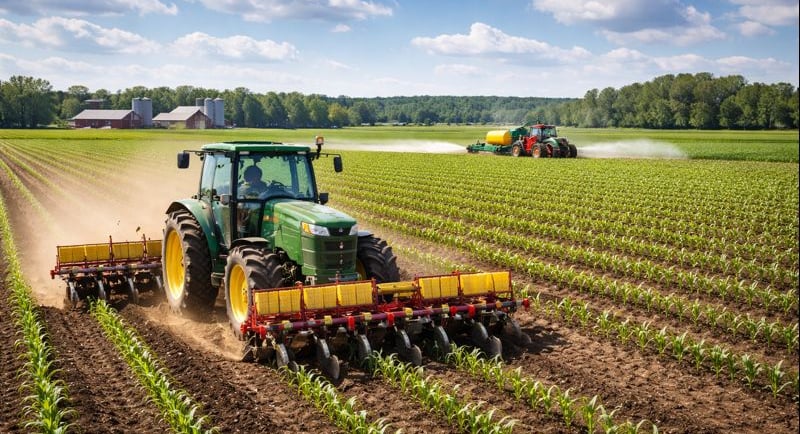
Modern machinery—including tractors, harvesters, seed drills, and sprayers—plays a central role in conventional farming. Mechanization increases efficiency, reduces labor requirements, and allows for large-scale operations.
On the downside, heavy machinery can cause soil compaction, reducing water infiltration and root growth while increasing erosion risk.
5. Focus on High Yields
The primary objective of conventional farming is maximizing output per unit of land. This approach is driven by economic pressures, population growth, and global food demand.
While high yields have helped feed billions of people, this emphasis often prioritizes short-term productivity over long-term soil health, biodiversity conservation, and ecosystem stability.
Advantages of Conventional Farming
Despite its criticisms, conventional farming offers several important advantages that explain its widespread adoption.
1. Higher Productivity
Conventional farming systems are capable of producing significantly higher yields compared to traditional or low-input farming methods. Improved seeds, fertilizers, and pest control measures ensure consistent and abundant harvests.
2. Lower Food Costs
By increasing efficiency and reducing production costs per unit, conventional farming helps keep food prices relatively low. Affordable food is particularly important for urban populations and low-income households.
3. Efficient Land Use
High-yield farming allows more food to be produced on less land. This can help reduce pressure to convert forests and natural ecosystems into agricultural land.
4. Access to Advanced Technology
Conventional farmers benefit from scientific research, biotechnology, precision agriculture tools, and data-driven management systems. These technologies improve predictability and reduce uncertainty in food production.
Disadvantages of Conventional Farming
While conventional farming has many benefits, it also poses significant environmental, social, and health challenges.
1. Environmental Degradation
The extensive use of synthetic fertilizers and pesticides contributes to soil degradation, water pollution, and air contamination. Nutrient runoff can cause eutrophication in rivers and lakes, leading to dead zones that harm aquatic life.
2. Soil Erosion and Degradation
Monocropping, intensive tillage, and heavy machinery damage soil structure and reduce organic matter. Over time, soil becomes less fertile and more prone to erosion, threatening long-term productivity.
3. Loss of Biodiversity
Conventional farming systems often replace diverse ecosystems with uniform crop fields. This reduces habitats for wildlife and disrupts ecological balance, including pollination and natural pest control.
4. Health Concerns
The presence of chemical residues in food and water has raised concerns about potential links to cancer, hormonal disruption, and other health issues. While regulatory agencies set safety limits, public skepticism remains.
5. Dependence on Fossil Fuels
Conventional farming relies heavily on fossil fuels for machinery operation, fertilizer production, and transportation. This contributes to greenhouse gas emissions and climate change.
Conventional Farming and Sustainability
As awareness of environmental issues grows, conventional farming faces increasing pressure to become more sustainable. Many farmers are now adopting integrated pest management (IPM), precision agriculture, reduced tillage, and nutrient management strategies to minimize negative impacts.
Some hybrid systems combine conventional methods with sustainable practices, aiming to balance productivity with environmental stewardship.
Conclusion
Conventional farming has played a crucial role in shaping modern agriculture and ensuring global food security. Its emphasis on efficiency, technology, and high yields has enabled the production of vast quantities of food at relatively low cost. However, the environmental, health, and sustainability challenges associated with this system cannot be ignored.
As the world faces climate change, population growth, and resource limitations, the future of agriculture will likely depend on improving conventional farming practices while integrating sustainable and ecological approaches. By learning from past successes and addressing existing drawbacks, agriculture can continue to evolve toward a more balanced and resilient food system.